Cycling in Ireland: The 10 Best Routes and How to Plan Them
Ireland's ten best multi-day bike routes, from the Ring of Kerry to Donegal's sea cliffs, with real daily distances, climbs, the season and the roads.
Quick links
Don't want to read all this?
We've planned 800+ cycling trips. Send your dates, fitness and group size — we'll map the route and book every night.


Cycling in Ireland means small roads, big Atlantic views and short hops between villages with a pub and a bed. The classic riding is on the west coast, where Kerry, the Burren, Connemara and Donegal run out into the ocean.
This guide covers ten routes worth planning a trip around. The first five we run as self-guided tours; the other five complete the list. They are numbered for easy navigation, not ranked.
Is Ireland Good for Cycling?
Yes. Biking in Ireland is best on the local L-roads of the west, single-track lanes between stone walls or fuchsia hedges where almost every view ends at the sea. Our tours ride 13 to 70 km a day on them.
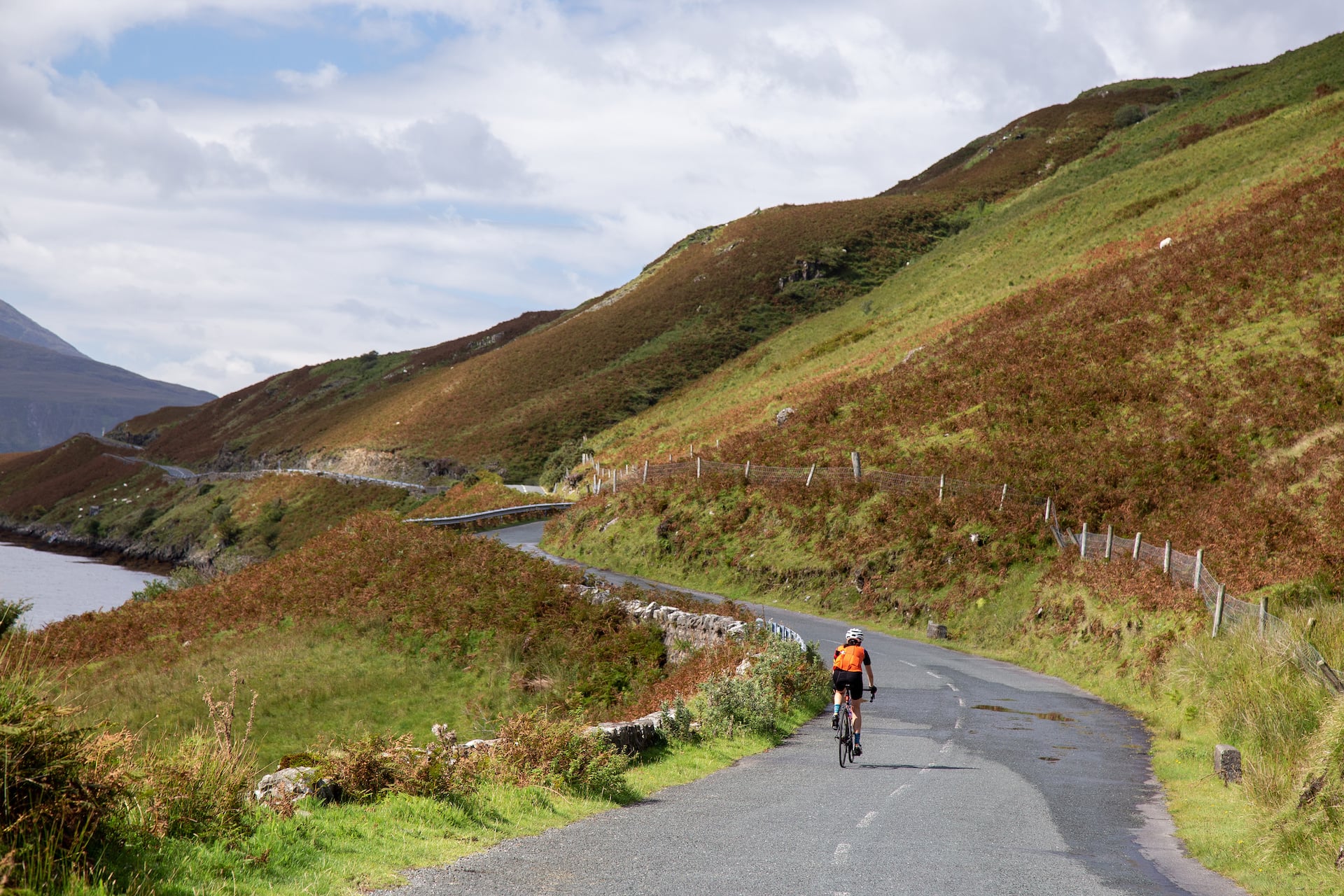
The trade-offs are hills, wind and showers, which come and go far more often than whole wet days. Met Éireann notes that the prevailing wind blows from between south and west. Greenways such as the Great Western Greenway make fine day rides, but most of a week in the saddle is on quiet country roads.
The Best Cycling Routes in Ireland at a Glance
Distances are for each route as we ride it or as it is signed, at a touring pace.
Route | Distance | Time | Best For |
Ring of Kerry and the Skellig Ring | ~270 km | 8 days | The classic first choice |
Beara Peninsula and the Gap of Dunloe | ~226 km | 7 days | The quieter Kerry peninsula |
Connemara and the Doolough Valley | ~218 km | 7 days | Lakes, fjord and an island |
The Burren, Cliffs of Moher and Aran Islands | ~155 km | 7 days | The gentlest week, with a hike |
Donegal, Sliabh Liag to Glenveagh | ~314 km | 8 days | The toughest and wildest week |
Wild Atlantic Way | ~2,500 km | 3 to 5 weeks | The whole west coast |
Mizen Head to Malin Head | ~570 to 925 km | 1 to 2 weeks | Ireland end to end |
Dingle Peninsula and the Conor Pass | ~150 km | 2 to 3 days | A long weekend from Tralee |
Causeway Coast | ~190 km | 3 to 4 days | Northern Ireland's basalt coast |
EuroVelo 2, Galway to Dublin | ~231 km | 3 to 4 days | Flat and partly traffic-free |
The Best Cycling Routes in Ireland
We run the first five as self-guided tours, with hotels booked, luggage moved and GPS routes in an app.
1. Ring of Kerry and the Skellig Ring
Distance: ~270 km (168 mi), ~3,160 m of climbing
Duration: 8 days, 6 riding days of 27 to 63 km
Route: Tralee to Killarney, anticlockwise round the Iveragh Peninsula
Surface: Paved roads and rural lanes
Difficulty: 3/5, rolling with a few real climbs
Best for: A first Irish cycling holiday
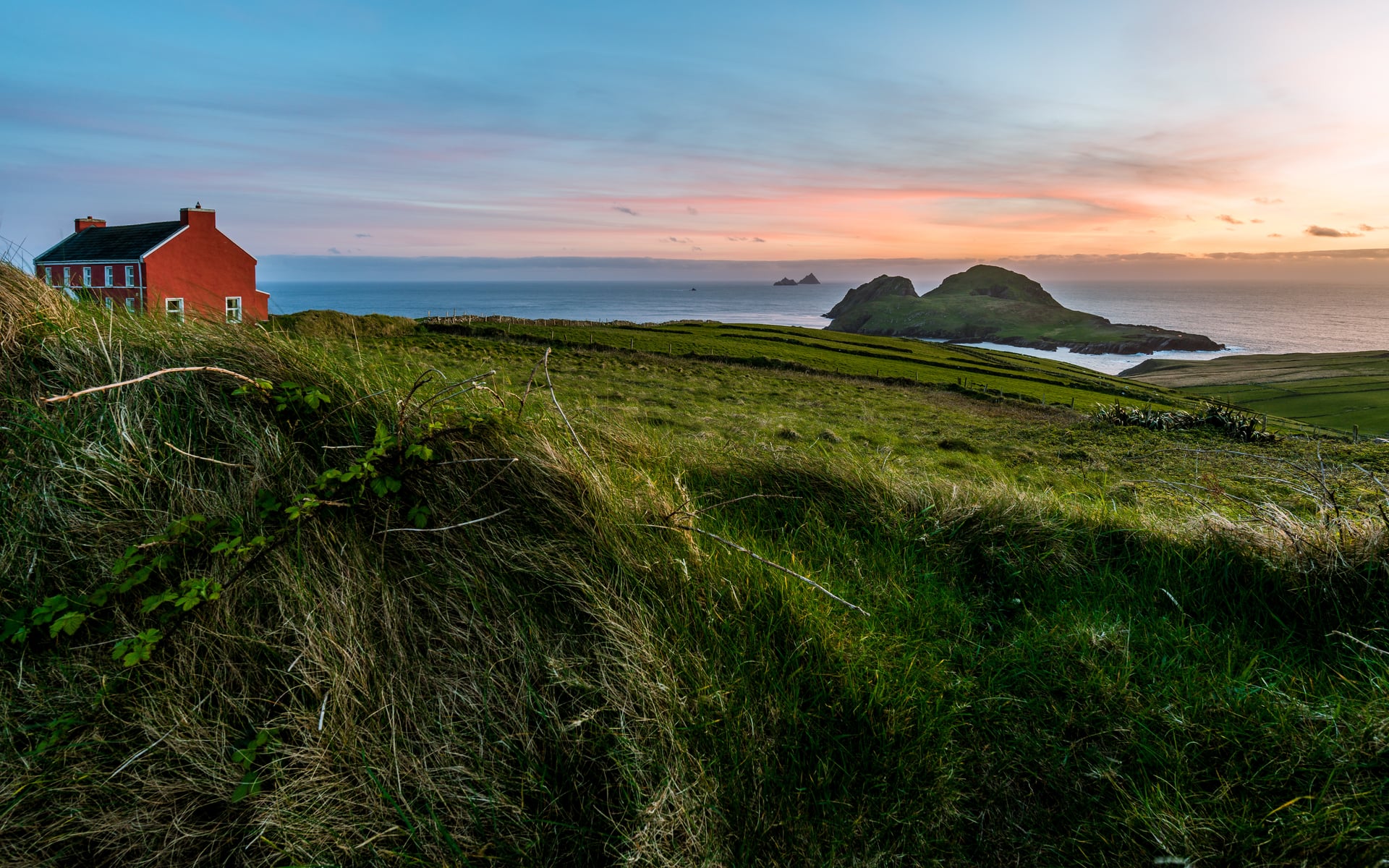
The Ring of Kerry is Ireland's best-known road loop. Our tour rides it anticlockwise from Tralee, past Lough Caragh to Glenbeigh and along the Atlantic to Cahersiveen, below Ballycarbery Castle.
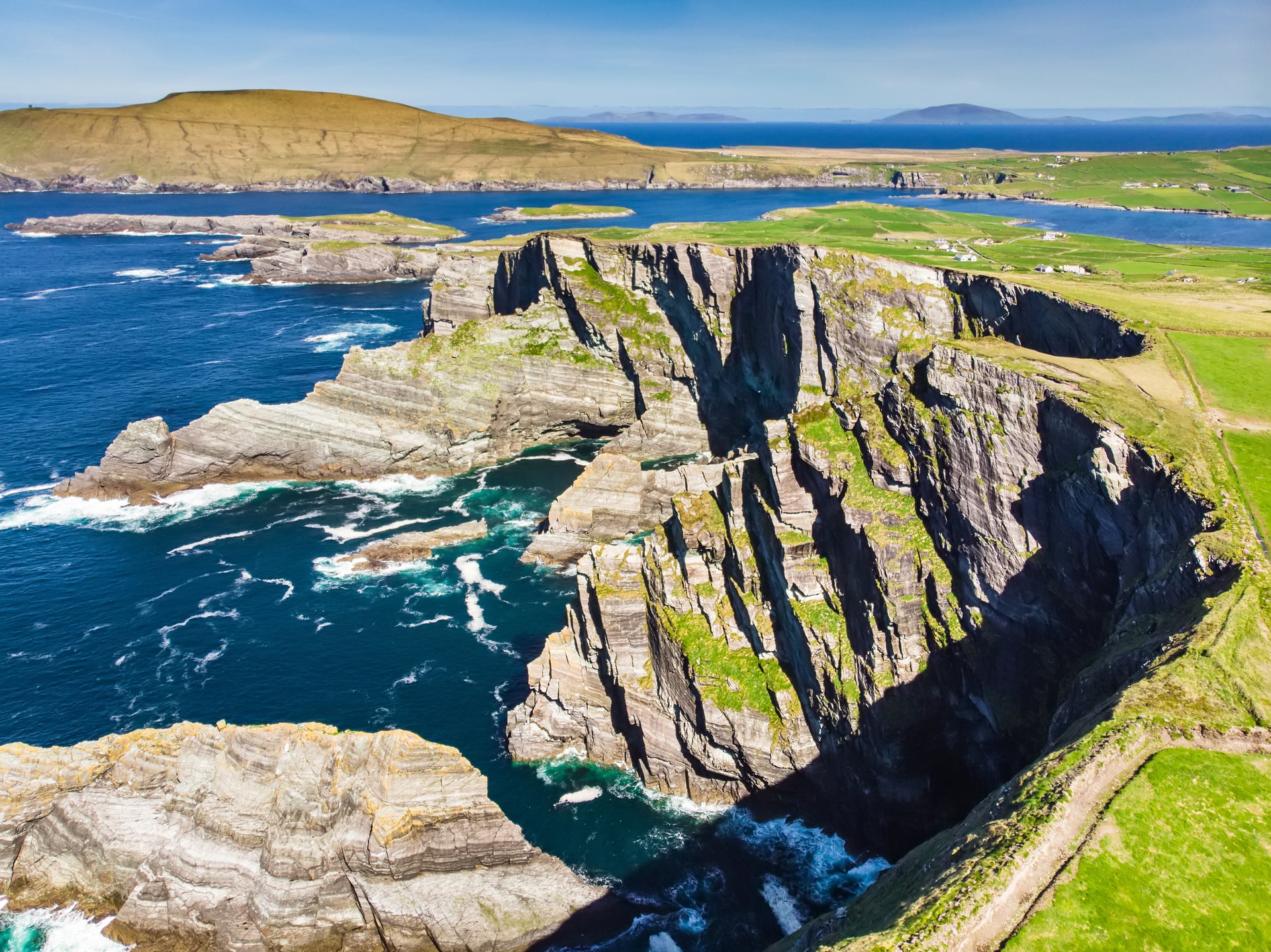
Day 4 takes the Skellig Ring, the quietest and most dramatic stretch of the week, over the Kerry Cliffs above Portmagee with the Skellig Islands offshore.
Map
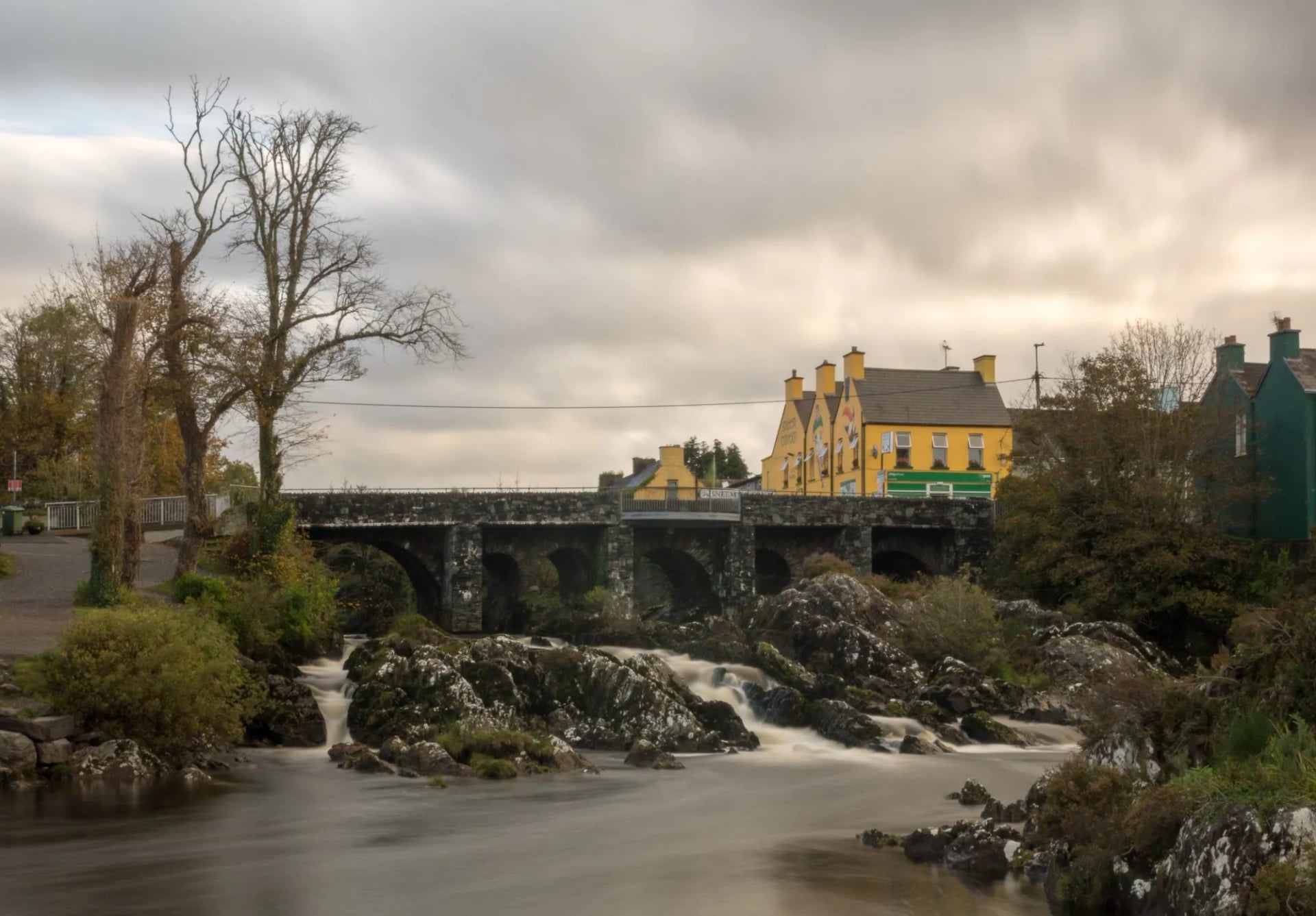
Then come Waterville, the climbs above Derrynane Bay, Sneem and Moll's Gap to Kenmare. The last day crosses the Black Valley and rides down the Gap of Dunloe into Killarney, on lanes the tour coaches cannot use. Choose it for the Kerry everyone talks about, at a moderate pace.
2. Beara Peninsula and the Gap of Dunloe
Distance: ~226 km (140 mi), ~2,800 m of climbing
Duration: 7 days, 5 riding days of 34 to 59 km
Route: Killarney loop via Kenmare, Castletownbere and Glengarriff
Surface: Quiet paved roads
Difficulty: 3/5, steady climbs, short stages
Best for: Kerry scenery with far fewer cars
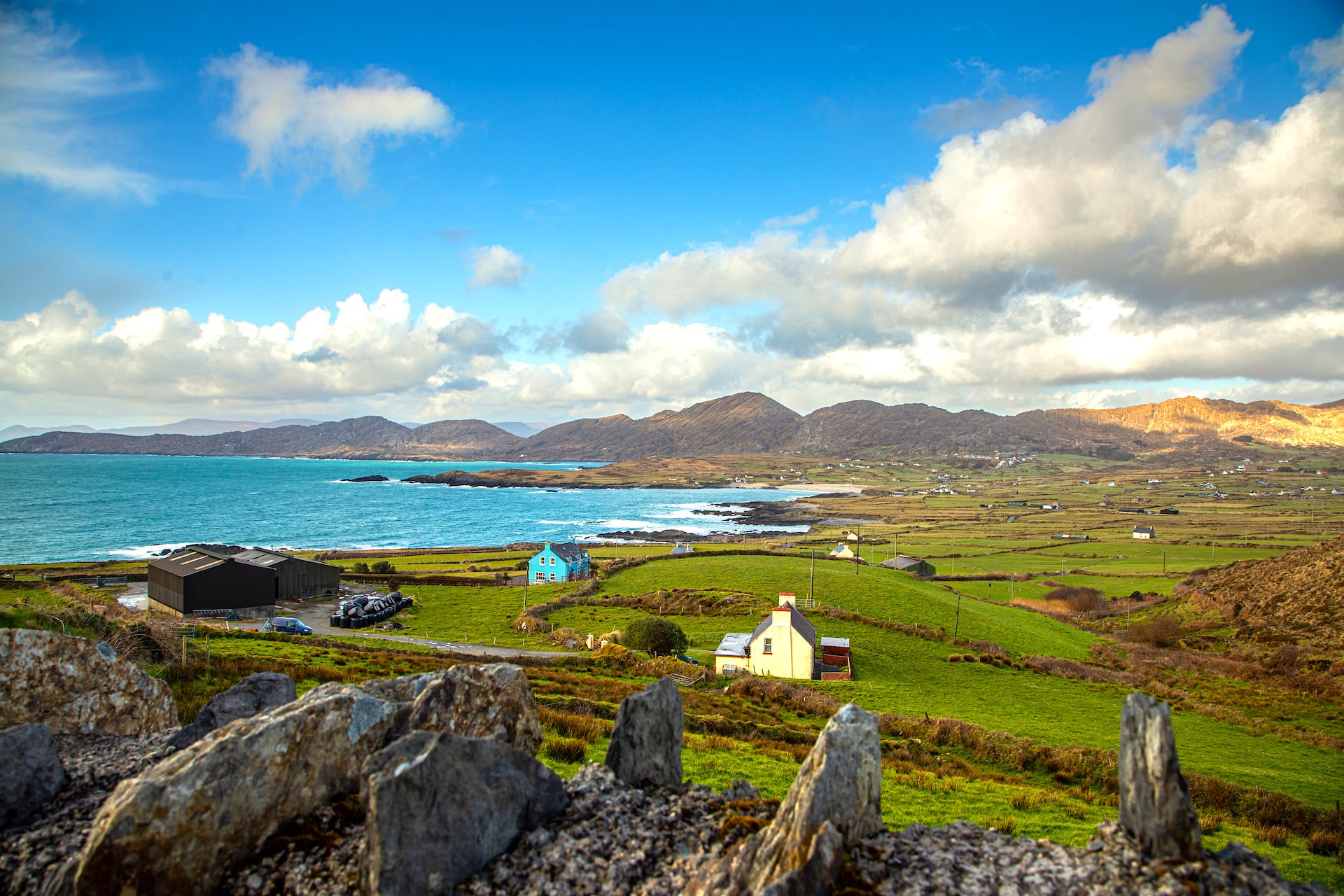
Beara, shared between Kerry and Cork, sees a fraction of the Ring of Kerry's traffic. Our tour opens through the Gap of Dunloe to Kenmare, then follows the north shore past the Ardgroom stone circle and the painted houses of Eyeries to Castletownbere.
Map
A loop day reaches Ballydonegan beach and the Beara Bowl below Eagle Hill. A short ride to Glengarriff leaves the afternoon free for the Garnish Island ferry, and the last day crosses Killarney National Park past Muckross Lake. Choose Beara for empty roads and a slower pace than the Ring.
3. Connemara, Inishbofin and the Doolough Valley
Distance: ~218 km (135 mi), ~1,780 m of climbing
Duration: 7 days, 5 riding days of 33 to 52 km
Route: Clifden, Leenaun, Westport and Cong, back to Galway
Surface: Paved country roads
Difficulty: 3/5, undulating rather than steep
Best for: Lakes, mountains and an island in one week
Connemara, the rugged west of County Galway, packs the most varied scenery into short days. From Clifden the tour loops to Cleggan for the Inishbofin ferry, then passes Kylemore Abbey to Killary Harbour, often called Ireland's only fjord.
Map
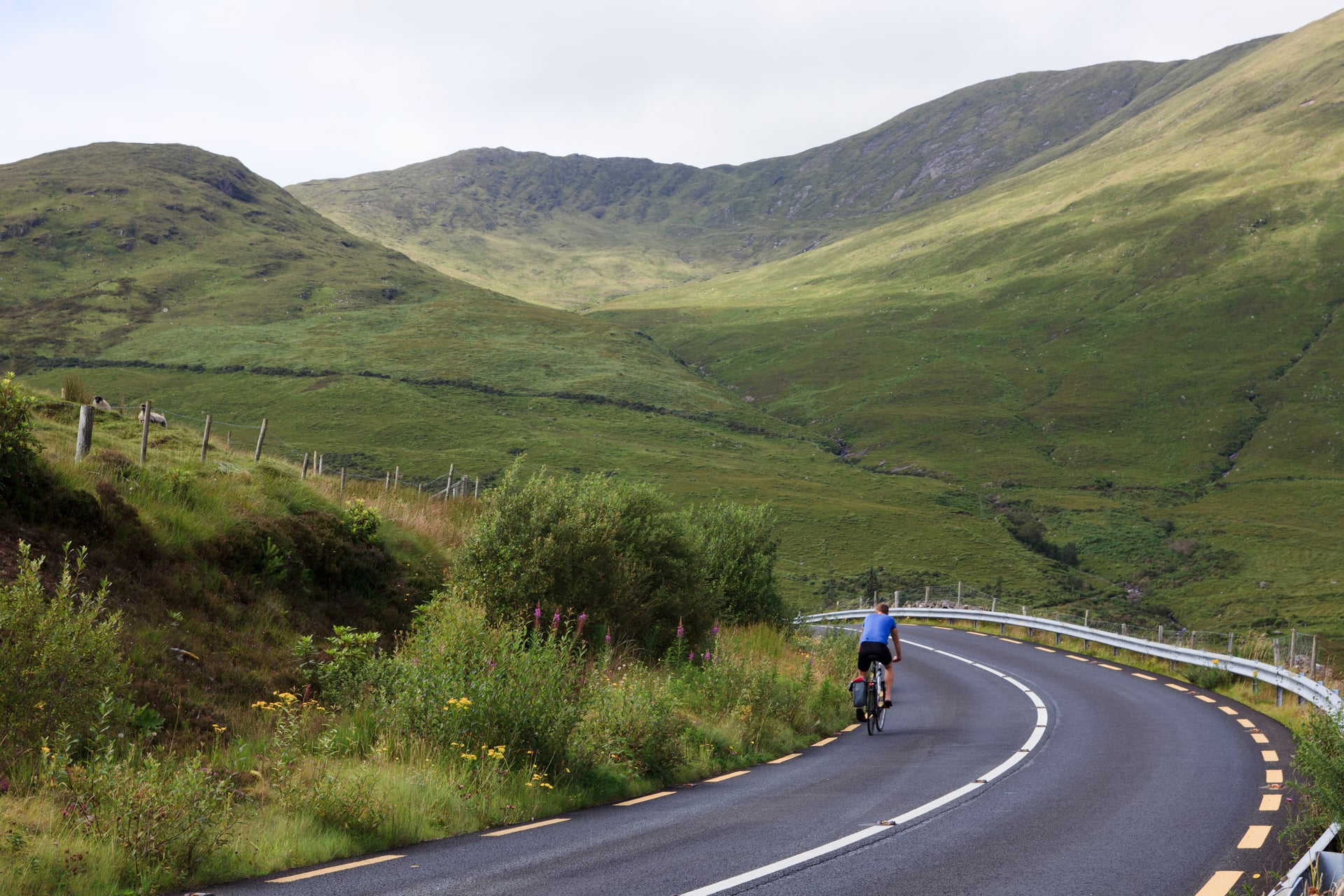
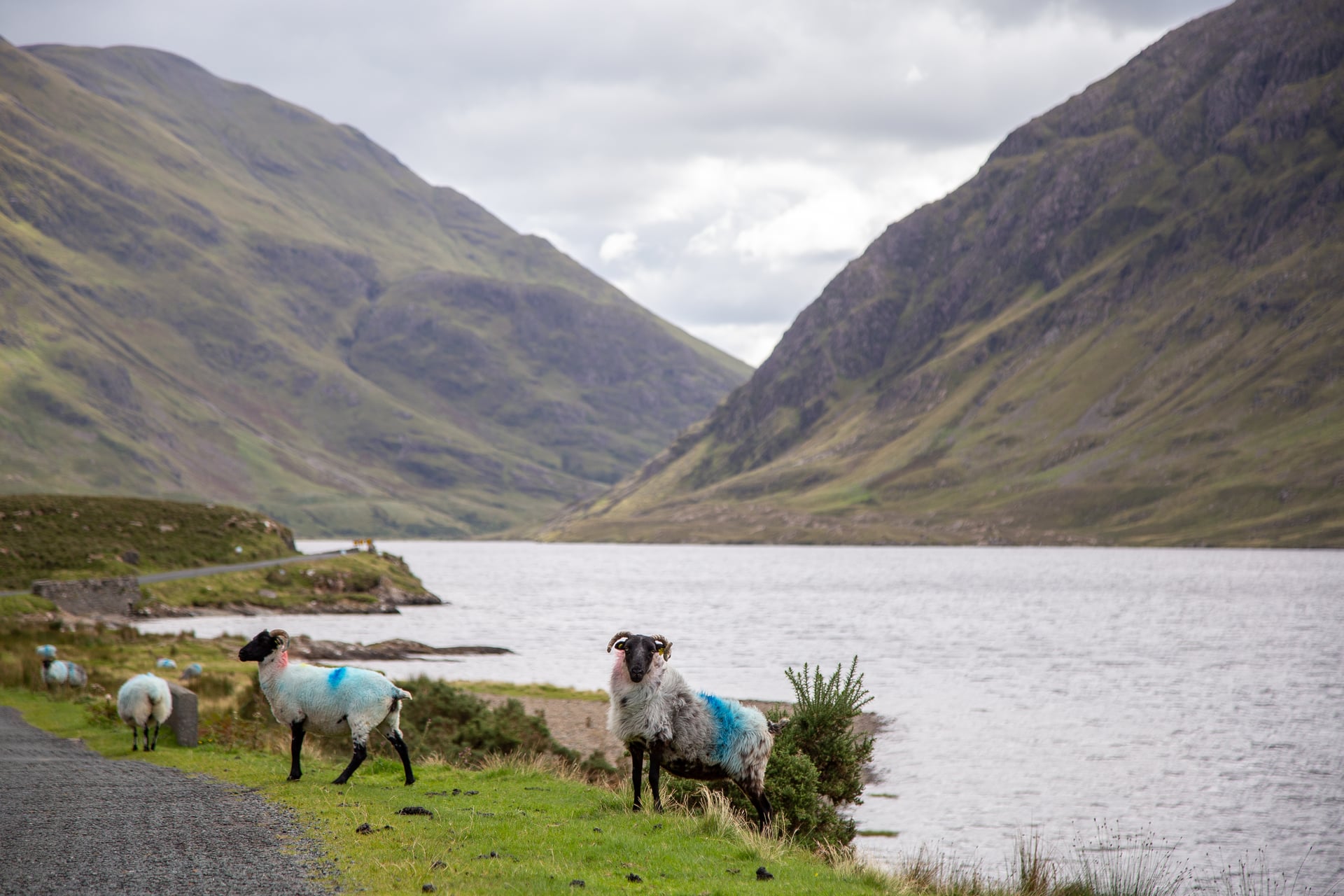
Day 4 rides the Doolough Valley, one road between dark mountains and the lake, towards Croagh Patrick and Westport. The last two days pass Lough Carra and Cong, then follow Lough Corrib, the Republic's largest lake, back to Galway. Choose it for the widest mix of landscapes in one week.
4. The Burren, the Cliffs of Moher and the Aran Islands
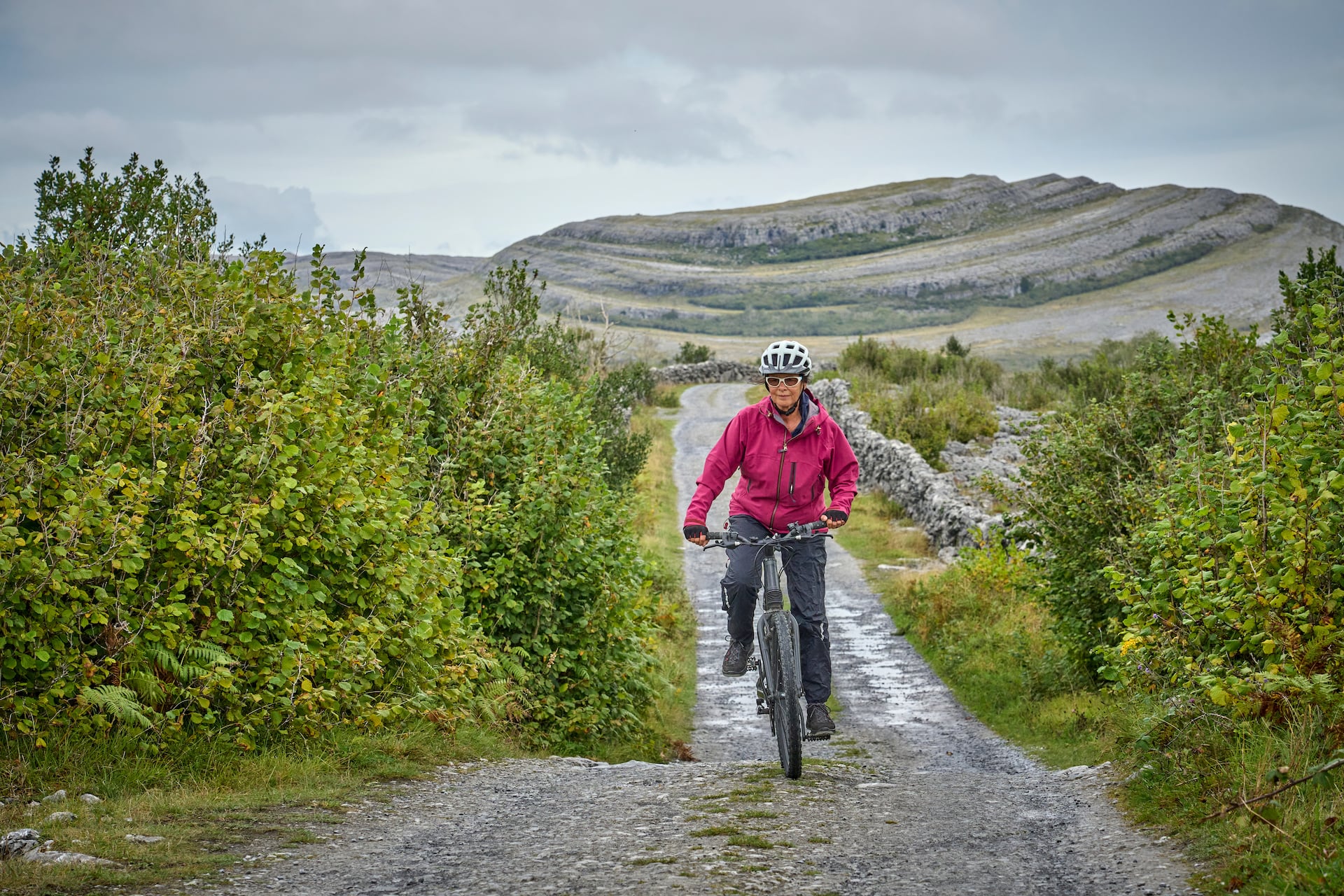
Distance: ~155 km (96 mi), plus a 12 km cliff hike
Duration: 7 days, 5 riding days of 13 to 48 km
Route: Galway loop via Kinvarra, Doolin and Inis Mór
Surface: Paved roads and island lanes
Difficulty: 2/5, our easiest Irish tour
Best for: A relaxed first tour, mixing cycling and walking
This is the gentlest week of cycling we offer in Ireland. It follows Galway Bay to Kinvarra and Dunguaire Castle, then crosses the bare limestone of the Burren to Ballyvaughan and Doolin, a village known for its traditional music.
Map
Day 4 is a 12 km hike along the Cliffs of Moher, which rise to 214 m. A ferry then crosses to Inis Mór for a ride to the cliff fort of Dún Aonghasa, and the last day returns through the Irish-speaking villages west of Galway.
5. Donegal: Sliabh Liag to Glenveagh
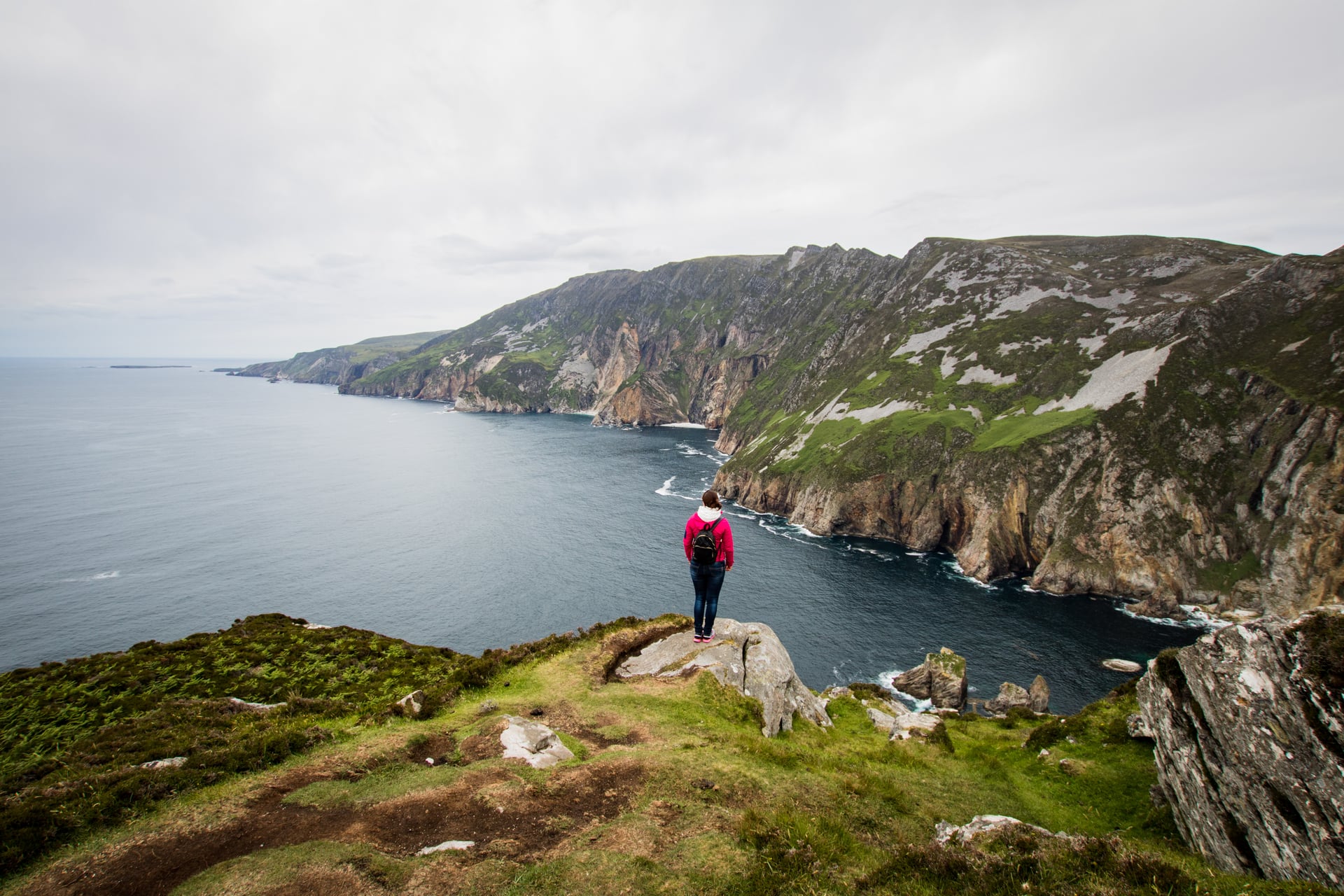
Distance: ~314 km (195 mi), ~4,400 m of climbing
Duration: 8 days, 6 riding days of 30 to 70 km
Route: Donegal town to Letterkenny via Carrick and Glenties
Surface: Paved roads, a cycle path out of Glenties
Difficulty: 4/5, the longest days and most climbing
Best for: Fit riders who want Ireland at its wildest
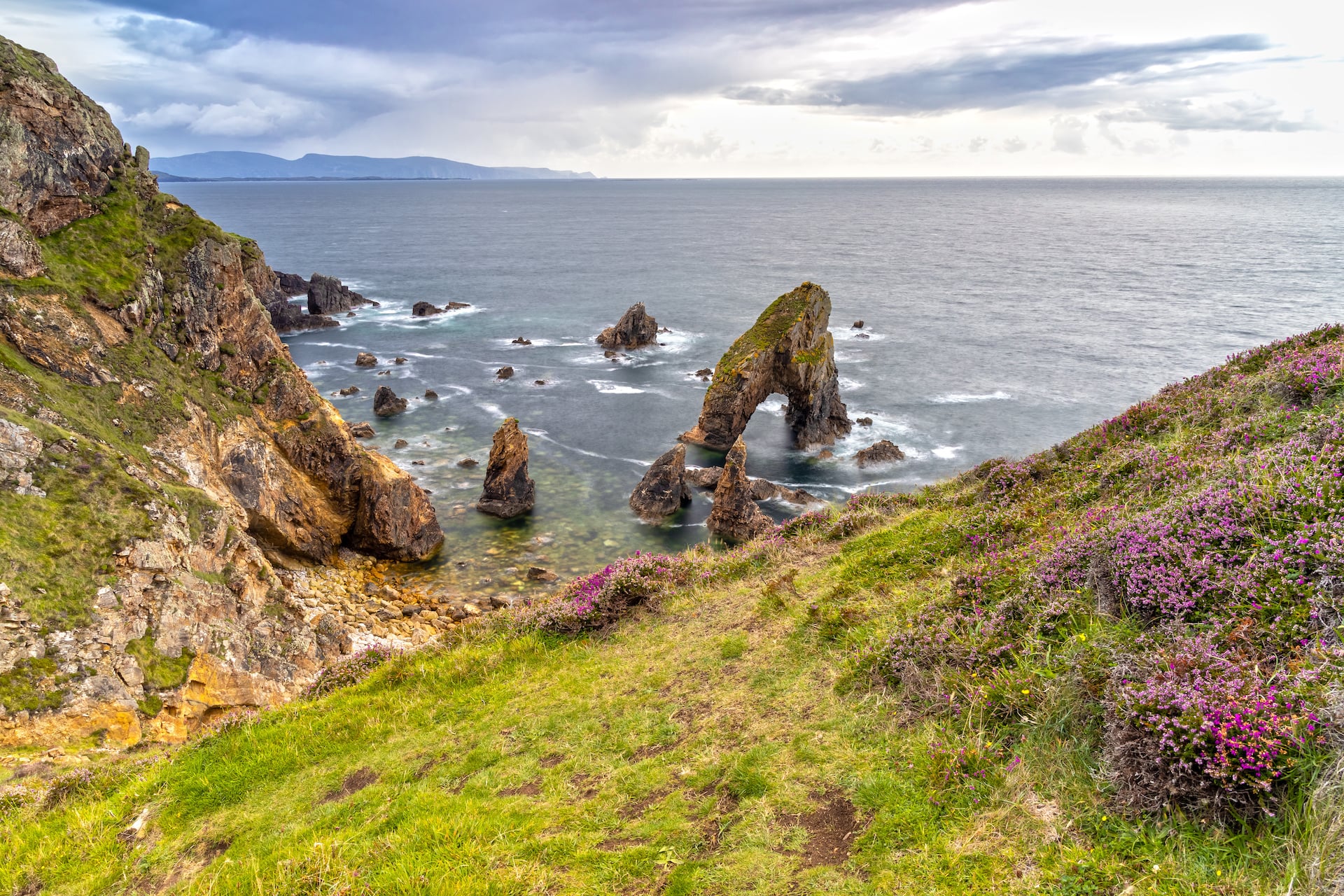
Donegal is the hardest week we run in Ireland. It follows Donegal Bay to Killybegs, Ireland's largest fishing port, and Carrick, the base for a hike to Sliabh Liag, among Europe's highest sea cliffs.
Map
The route crosses bog to Maghera Beach and Glenties, loops to the Kilclooney Dolmen, and rounds Crohy Head to Annagry. The finale passes Mount Errigal, Donegal's highest peak, and Glenveagh National Park on the way to Letterkenny. Choose it for big days and few other tourists.
The next five routes we do not run as tours, but each makes a fine self-planned trip.
6. Wild Atlantic Way (EuroVelo 1)
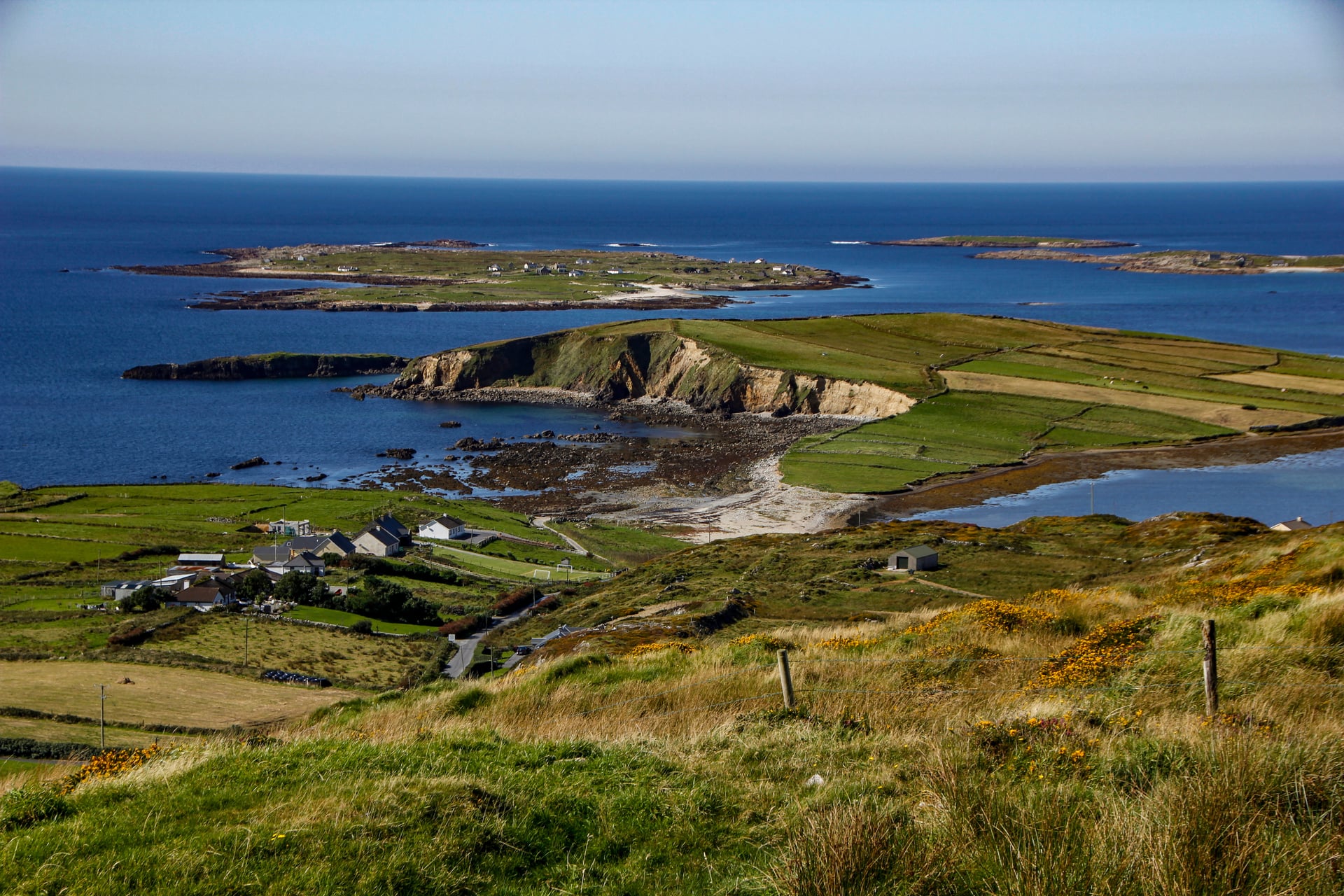
Distance: ~2,500 km; EuroVelo 1 runs over 2,300 km in the Republic
Duration: 3 to 5 weeks
Route: Kinsale in Cork to Inishowen in Donegal
Surface: Roads of every size
Difficulty: 4/5 over the whole distance
Our tour: All five tours above ride sections of it
The Wild Atlantic Way follows the west coast for about 2,500 km, and most riders take it a week at a time, as our five tours do. Our guide to cycling the Wild Atlantic Way covers it section by section, with distances, direction and timing.
7. Mizen Head to Malin Head
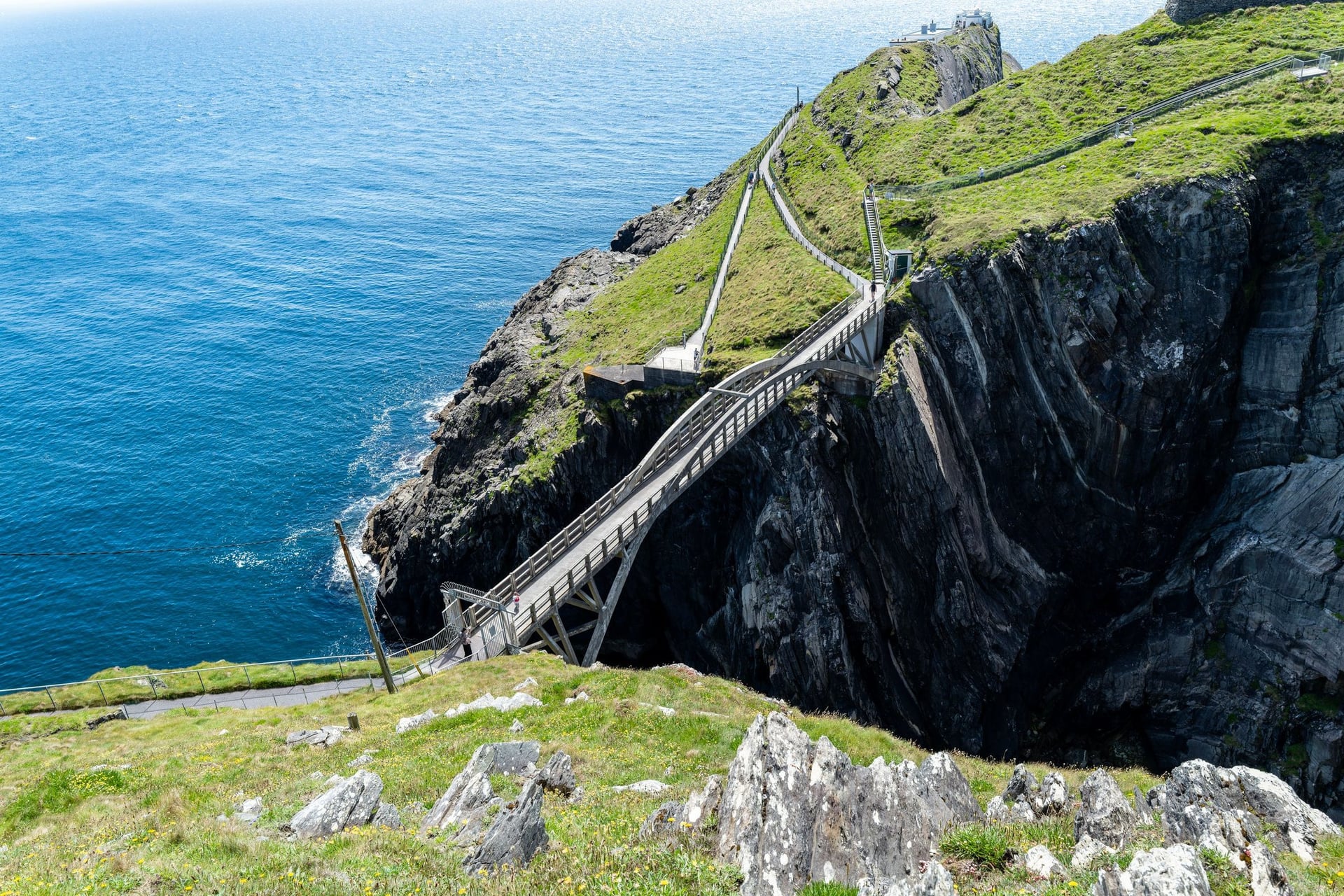
Distance: ~570 km direct; up to ~925 km on coastal versions
Duration: 1 to 2 weeks
Route: Mizen Head in Cork to Malin Head in Donegal
Surface: Mixed, mostly quiet roads
Difficulty: 4/5, long days
Best for: Riders who want a start, a finish and a story
"MizMal" is Ireland's end-to-end ride, from the south-western tip to the most northerly point of the mainland. There is no single official line: the most direct roads give about 570 km, coastal versions about 925 km.
Riding north keeps the prevailing wind mostly behind you. The finish is Banba's Crown on Malin Head, with nothing beyond it but the Atlantic.
8. Dingle Peninsula and the Conor Pass
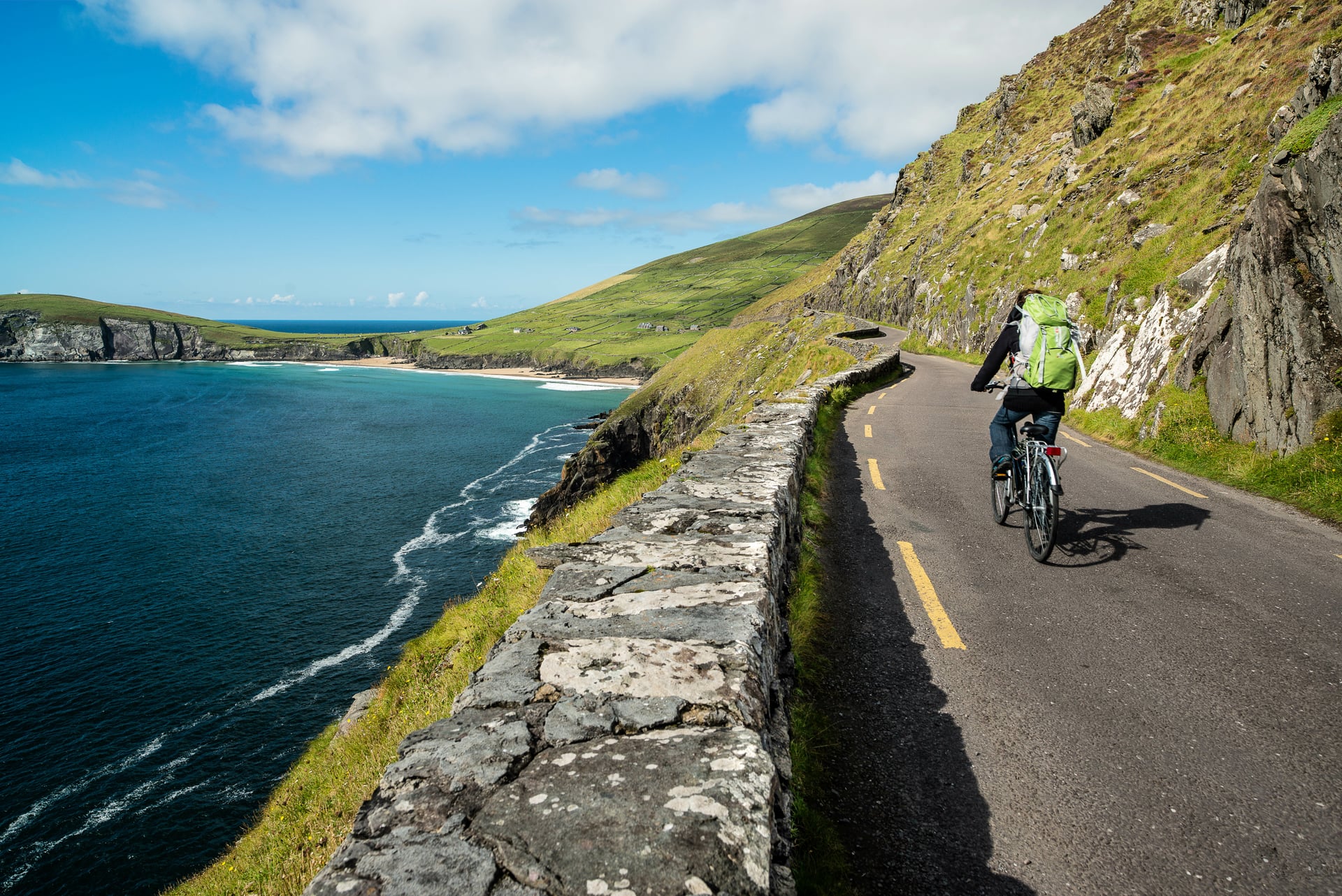
Distance: ~150 km from and back to Tralee
Duration: 2 to 3 days
Route: Tralee, the Conor Pass, Dingle, Slea Head and back via Inch
Surface: Paved roads
Difficulty: 3/5, one long climb
Best for: A short trip from a railway station
Dingle fits a whole Irish cycling holiday into a long weekend. From Tralee, on the railway from Dublin, the road climbs the Conor Pass, at 456 m Ireland's highest paved pass, and drops to Dingle town.
The Slea Head loop of about 50 km circles the peninsula's tip past Dunquin and the Blasket Islands. The ride back passes the long sand spit of Inch Beach.
9. Causeway Coast (Belfast to Derry)
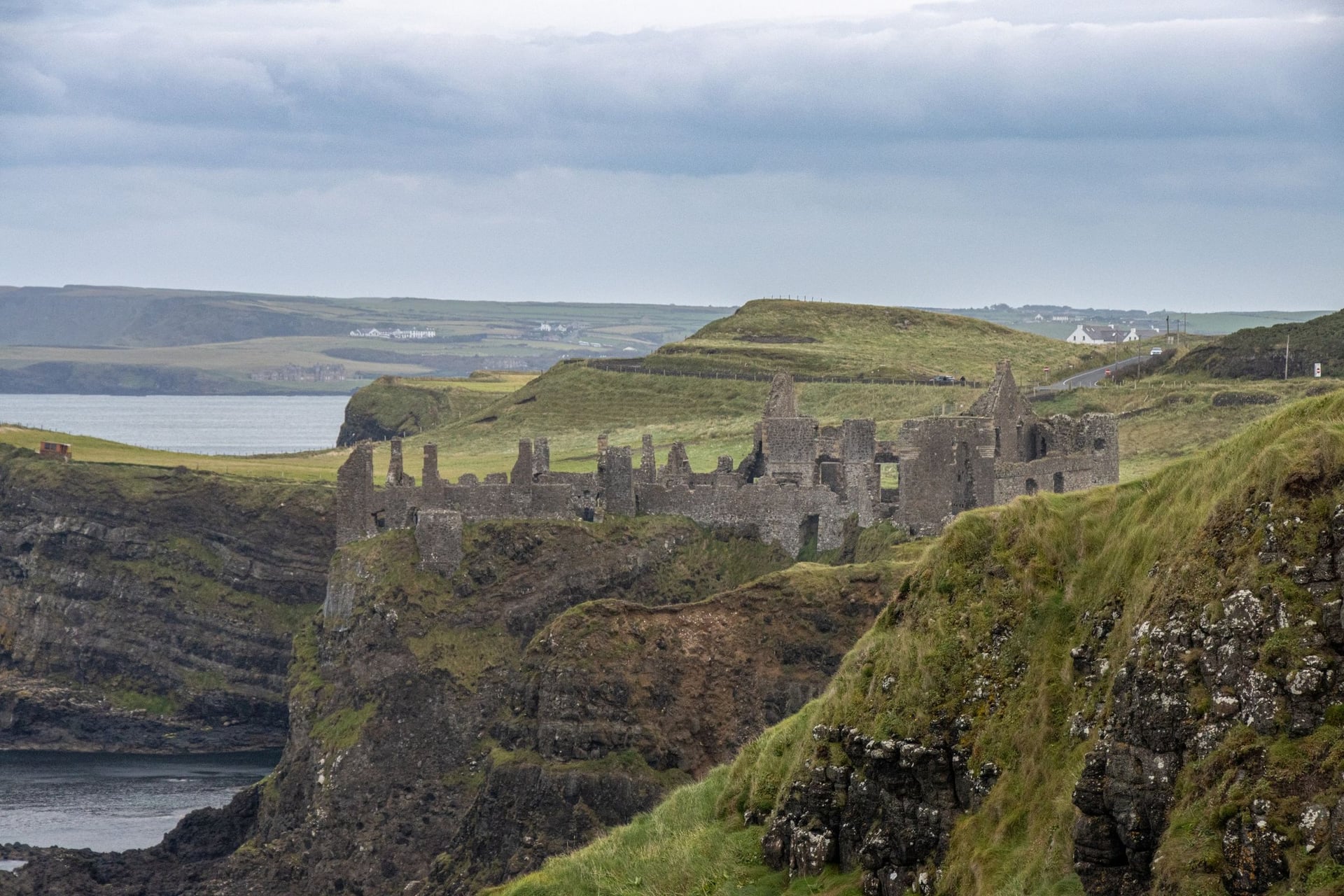
Distance: ~190 km (120 mi)
Duration: 3 to 4 days
Route: Belfast to Derry~Londonderry along the Antrim coast
Surface: Coast road, busy near Belfast
Difficulty: 3/5, climbs out of the Glens of Antrim
Best for: Castles, cliffs and the Giant's Causeway
The Causeway Coastal Route runs about 190 km from Belfast to Derry~Londonderry, through the Glens of Antrim and past Carrick-a-Rede, Dunluce Castle and the Giant's Causeway.
The A2 out of Belfast is busy, so Larne makes a quieter start. The Belfast to Derry railway brings you back, and ferries from Cairnryan land at Belfast and Larne.
10. EuroVelo 2: Galway to Dublin
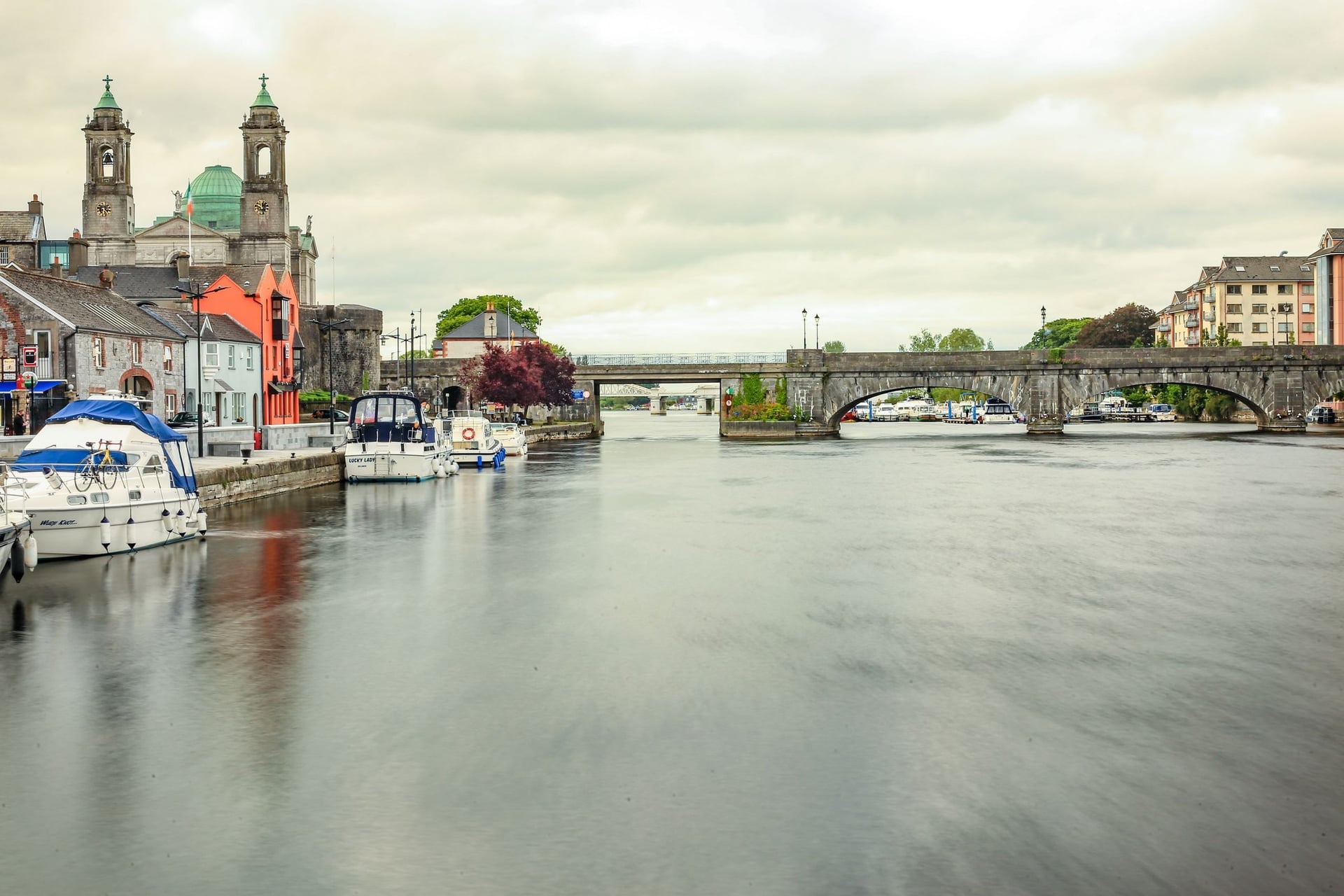
Distance: ~231 km, about 135 km of it traffic-free
Duration: 3 to 4 days
Route: Galway to Dublin Port via Athlone, Mullingar and Maynooth
Surface: Greenway and canal towpath east of Athlone, quiet roads west
Difficulty: 1/5, virtually no hills
Our tour: The Connemara and Cliffs of Moher tours finish in Galway, its start
EuroVelo 2 crosses the middle of Ireland and is the one easy multi-day ride on this list. East of Athlone it follows the Old Rail Trail to Mullingar and the Royal Canal to Maynooth, all traffic-free.
Ten train stations sit on the route, so any day can be cut short.
Best Time to Cycle in Ireland
The season runs from May to September, when all our tours run. May and June are the pick: Met Éireann records them as the sunniest months, and the roads are quiet before the school holidays.
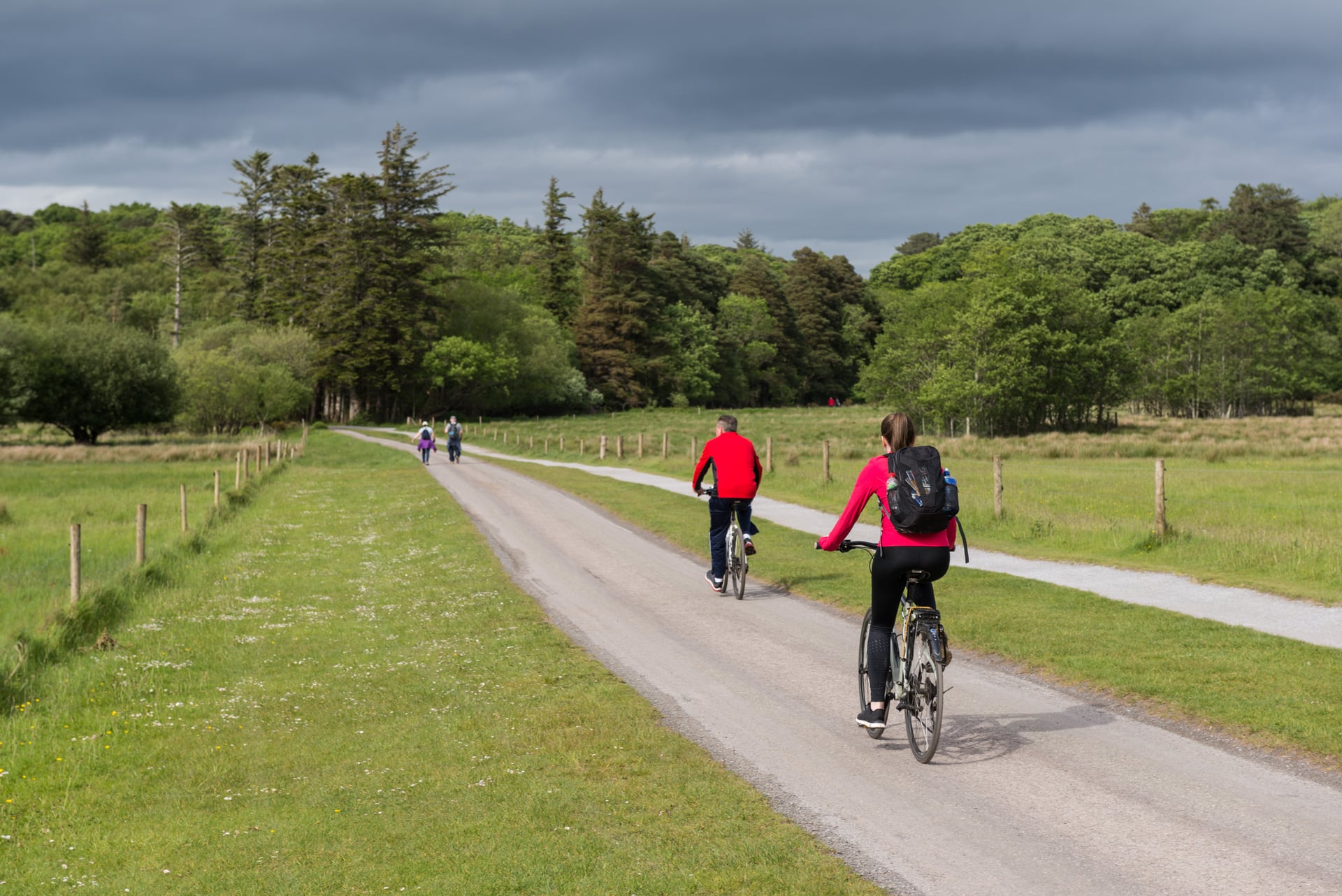
July and August are warmest but busiest, with coaches on the Ring of Kerry, so book rooms well ahead. September is quieter and still mild, but wetter. In June it stays light until around ten in the evening on the west coast.
Whatever the month, pack for showers. Riding north along the west coast keeps the prevailing wind mostly behind you, which is why most long-distance riders head north.
Roads, Traffic and Safety on an Irish Bike Trip
Ireland drives on the left. The hazards are narrow lanes with high hedges, blind bends, tractors and sheep, so ride as if a car is round every corner. In July and August, avoid the main Ring of Kerry road in the middle of the day, when most tour coaches are on it.
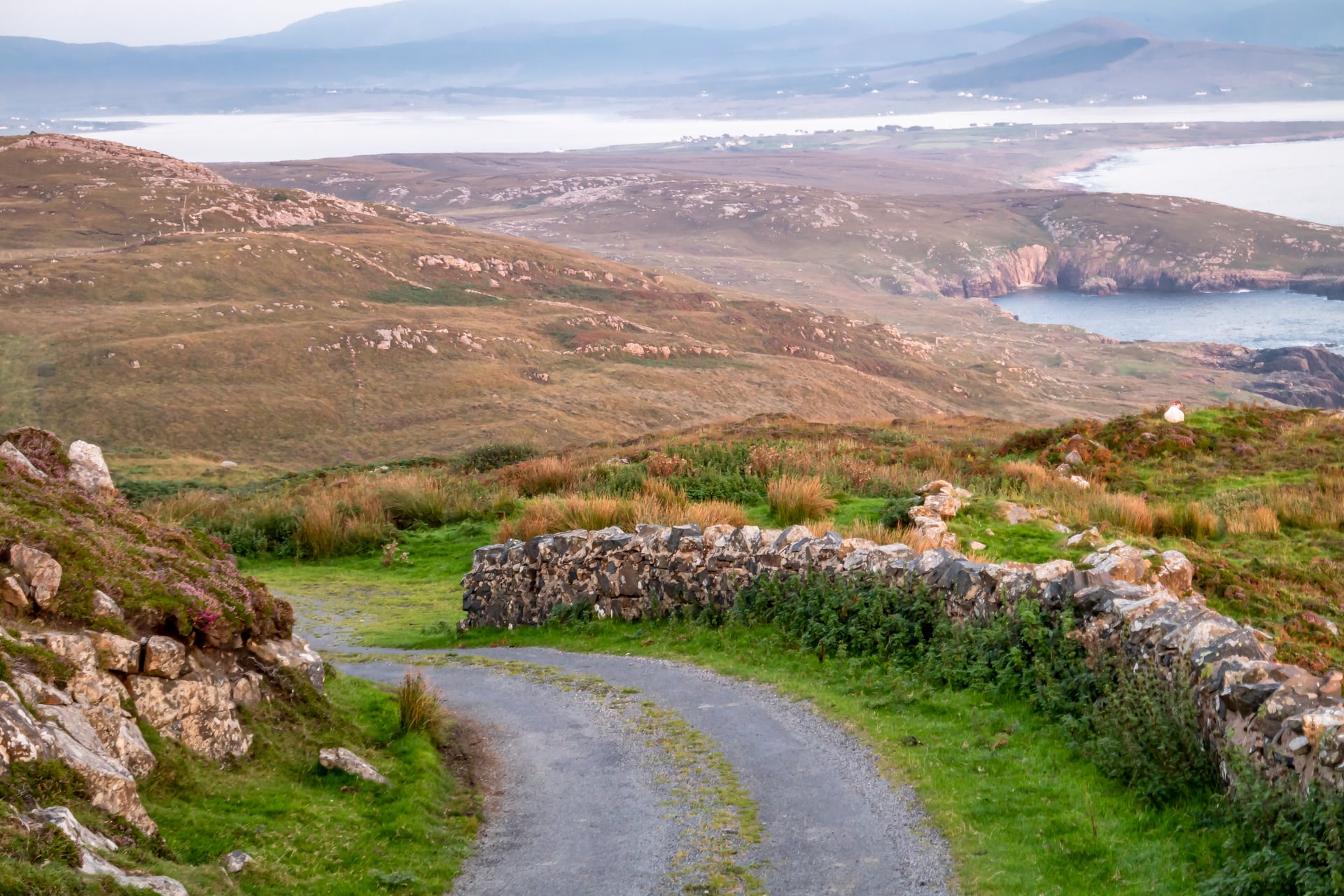
Cyclists may ride two abreast, but single out for overtaking traffic. Lights and a red rear reflector are required after dark. The Road Safety Authority asks drivers to leave 1 m when passing at up to 50 km/h, and 1.5 m above that.
How to Get There
Dublin and Shannon airports have direct flights from North America. Kerry Airport is under 20 km from Tralee and Killarney. The table shows the main ferry, train and bus links, with typical 2026 journey times.
Way In | Route | Time | Good to Know |
Ferry | Holyhead to Dublin | ~3 h 15 min | Irish Ferries and Stena Line |
Ferry | Fishguard or Pembroke to Rosslare | ~3 h 30 min to 4 h | Start of EuroVelo 1 |
Ferry | Cairnryan to Belfast or Larne | ~2 h 15 min | For the Causeway Coast |
Train | Dublin Heuston to Galway | ~2 h 30 min | Connemara and Cliffs of Moher tours |
Train | Dublin Heuston to Tralee or Killarney | ~3 h 40 min | Kerry and Beara tours |
Bus | Dublin to Donegal town | ~4 h | Expressway route 30; no railway |
Bikes travel free on InterCity trains, but you must book a bike space online, and some trains have only two. On our tours the rental bike is delivered to your first hotel.
How Much It Costs
Our five Irish tours include the nights with breakfast, daily luggage transfers, the digital guidebook, the GPS app and support. Bike rental, single rooms and transfers are extras, and meals, island ferries and the tourist tax are paid as you go.
There are no tolls or permits for cyclists on any route here. Rooms are the cost that changes most with the season. In July and August, B&Bs and hotels in Kerry and Galway charge their highest rates of the year, and the best ones sell out weeks ahead. A trip in May, June or September costs less and leaves more choice.
What to Pack
Pack for rain in every month: a waterproof jacket, a warm layer, full-finger gloves and quick-drying shoes. Lights and a rear reflector are compulsory after dark.
For bike touring in Ireland, our tours use gravel bikes or e-bikes, which suit the rough lane surfaces. Pack sun cream too: the cool sea breeze stops you feeling the sun, so it is easy to burn on a cloudy day. Download an offline map before you set off, because phone signal drops out on remote peninsulas such as Beara and west Donegal.
Frequently Asked Questions



Plan with a cycling expert
Free advice from a team that knows these routes inside out - real people, not a bot

Hassle-Free
We take care of route planning, accommodations, luggage transfers, and all logistics, so you can focus purely on enjoying your ride.

Tried & Tested Adventures
Our cycling routes are hand-picked & tested, to ensure breathtaking landscapes, smooth roads, and maximum safety - giving you the perfect ride every day.

Unbeatable Support
Our 24/7 customer support is where we show our passion, ensuring your cycling holiday runs smoothly and your well-being is always our top priority.

Book with Confidence
We are a financially protected company, fully bonded and insured, keeping your money safe and allowing you to travel with confidence.